There is something powerful about owning land in Jamaica.
For Jamaicans living overseas, land is rarely just land. It can feel like a connection to home, a retirement dream, a family inheritance, or proof that all the years of working abroad were building toward something solid.
Maybe it is land your grandmother always said belonged to the family. Maybe it is a piece of property you bought years ago and have not checked on in a while. Maybe you are planning to build a house back home one day. Or maybe someone in Jamaica has called you about “a good piece of land” and you are trying to figure out what is real before you send money.
Whatever the situation, one thing matters before emotion takes over:
The paperwork has to be right.
In Jamaica, people often speak about land through family memory, community knowledge, and long-standing arrangements. That may explain the history of the land, but it does not always prove legal ownership. A land title, a title search, and proper legal guidance can make the difference between protecting your investment and stepping into years of confusion.
This guide breaks down what Jamaicans abroad should understand about land titles in Jamaica, especially before buying, inheriting, building, or trusting verbal family claims.
What Is a Jamaican Land Title?
A Jamaican land title is an official record that shows who legally owns a registered piece of land.
In simple terms, think of it as the government’s official ownership record for the property. It identifies the land, the registered owner, and certain legal interests connected to that property, such as mortgages or restrictions.
In Jamaica, registered land is handled through the National Land Agency, often called the NLA. The NLA keeps the official land records, including Certificates of Title.
There are usually two important versions people talk about:
- The Original Certificate of Title
This is kept in the official government registry. - The Duplicate Certificate of Title
This is the physical copy issued to the registered owner.
The duplicate title is important, but here is where many people get caught:
A photo, scan, or old paper copy of a title is not enough.
The official record at the NLA is what needs to be checked. A duplicate title may not show everything that has happened recently, such as a mortgage, caveat, court matter, or other registered interest.
So if someone sends you a WhatsApp photo of a title and says, “See it here, everything good,” that is not where your due diligence should end.
Understanding Volume and Folio
If you have seen a Jamaican land title before, you may have noticed the words Volume and Folio.
These numbers are very important.
The Volume and Folio act like the property’s official reference number in the land registry. You can think of it like this:
- Volume = the book or file where the record is stored
- Folio = the exact page or record for that property
For example, a title may be listed as:
Volume 1234 Folio 56
That combination helps identify the specific registered property. If you want to run a title search, check ownership, or ask an attorney to review the title, the Volume and Folio numbers are usually needed.
Without them, finding the correct record can be harder, especially if the family only knows the land by district, nickname, nearby shop, or “down by Miss Ivy old place.”
And you know how Jamaica directions go. Helpful, but not always legal-document helpful.
Registered Land vs. Unregistered Land
One thing many Jamaicans abroad do not realize is that not all land in Jamaica is registered.
That means some land does not have a registered title with a Volume and Folio number.
Jamaica has a long history of land being passed down through families, occupied over generations, or transferred informally. Because of that, some land may still be unregistered, especially in rural areas.
Registered land
Registered land has an official Certificate of Title. It should have a Volume and Folio number, and the ownership information is recorded through the NLA.
This does not mean there can never be problems, but it gives you a clearer starting point for verifying ownership.
Unregistered land
Unregistered land does not have a registered title under the title system.
Ownership may be based on older documents, wills, deeds, tax records, possession history, family arrangements, or other evidence. This can become complicated, especially when several generations have passed and no one properly handled the estate.
Unregistered land is one reason family land disputes can become so messy. Everybody may “know” the land belongs to the family, but proving exactly who has legal rights is a different matter.
The Family Land Issue: When “Everybody Knows” Is Not Enough
Family land is one of the most emotional topics for Jamaicans.
It may be land bought by a grandparent, left by a parent, or used by relatives for decades. The family may have always said, “This is our land.” People may have built houses, planted crops, paid taxes, or lived there for years.
But here is the hard truth:
Family understanding is not the same as legal ownership.
That does not mean the family has no rights. It means the rights need to be properly confirmed.
A common issue is that the title may still be in the name of someone who died years ago. Maybe a grandparent passed away and no one handled probate or administration. Maybe several children had a right to the estate, but only one person stayed on the land. Maybe one relative overseas has been sending money, while another relative in Jamaica has been making decisions.
That is where confusion starts.
Before buying, selling, building, or putting major money into family land, you need to know:
- Whose name is currently on the title?
- Is the person on the title still alive?
- Was there a will?
- Was probate or administration completed?
- Has the land been transferred to the rightful heirs?
- Are there multiple family members with a legal interest?
- Has the land been subdivided properly?
If the land is still in the name of a deceased relative, pause before spending money. Do not assume that a verbal family agreement is enough to protect you.
Related Article: Understanding Family Land in Jamaica
Why a Title Search Matters
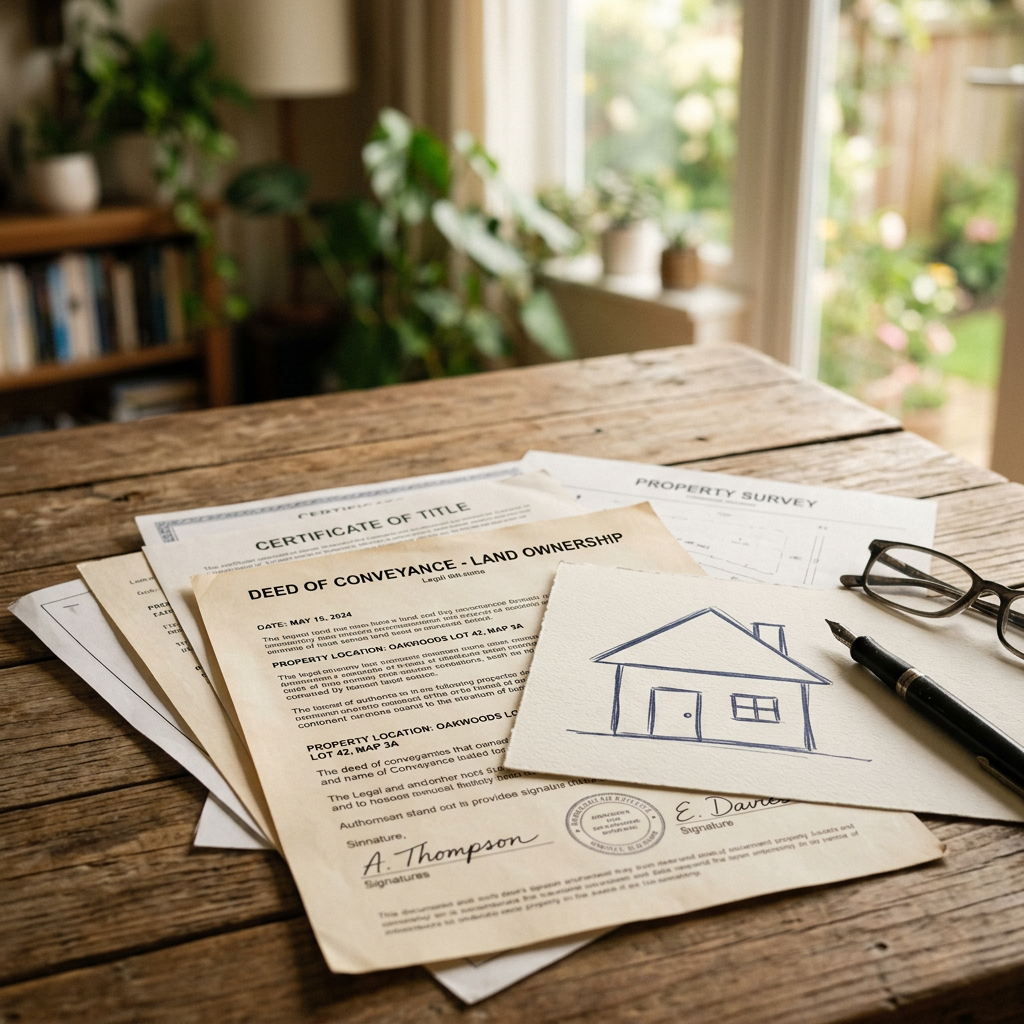
A title search is one of the most important steps before buying, inheriting, building, or trusting a land claim.
A title search checks the official NLA record for the property. It can help confirm who is listed as the owner and whether anything is registered against the title.
A proper search may reveal things like:
- The registered owner’s name
- The property description
- Mortgages
- Caveats
- Transfers
- Restrictions
- Court-related matters or other registered dealings
This matters because a paper copy alone may not show the current picture.
A seller may show you a duplicate title. A relative may send you a photo. Someone may tell you the land is “clean.” But unless the official record is checked, you do not really know what may be attached to that property.
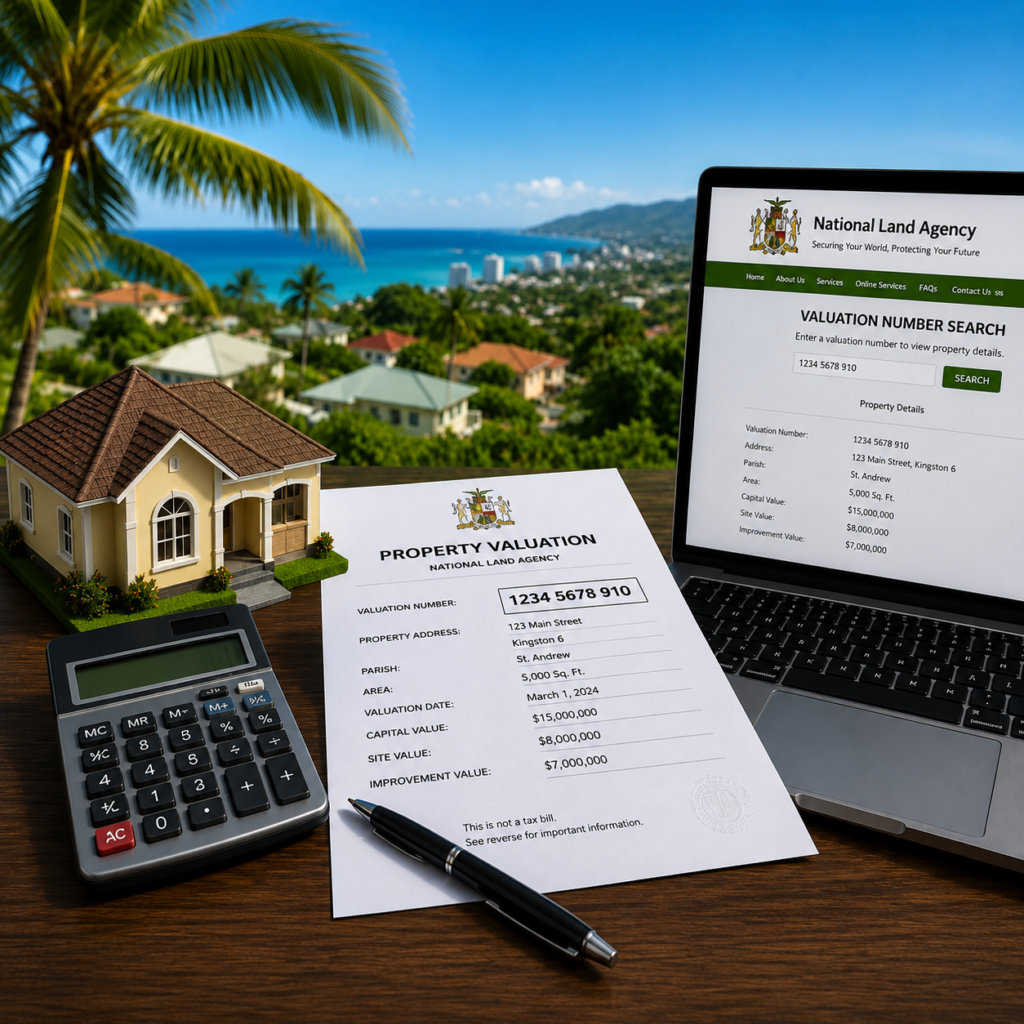
At the time of writing, NLA search fees are relatively low in Jamaican dollars, but fees can change. Always check the current fee schedule directly with the National Land Agency or through your Jamaican attorney.
What Is a Caveat?
A caveat is a legal warning placed on a title by someone claiming an interest in the land.
In simple language, it is like a red flag on the property record. It may stop or delay certain dealings with the land, such as a sale or transfer, until the issue is addressed.
A caveat does not automatically mean the person filing it is right. But it does mean there is a claim that needs attention.
This is why a title search is so important. If you are overseas and planning to buy or build, you do not want to discover later that someone had already placed a legal warning on the property.
What to Check Before Buying Land in Jamaica
Buying land in Jamaica from overseas can be done, but you need to move carefully. Do not let excitement, family pressure, or a “good deal” rush you into sending money before the basics are checked.
Before buying land, make sure you or your Jamaican attorney checks the following:
1. Confirm the seller has the legal right to sell
Do not rely only on what the seller says. Check the title. Confirm the name on the title matches the person selling or that the seller has proper legal authority to act.
2. Run an independent title search
Use the Volume and Folio numbers to check the official NLA record. Do this through the NLA, eLandJamaica, or your attorney.
3. Check for mortgages, caveats, or restrictions
A title may have registered interests that affect whether the land can be sold or transferred freely.
4. Confirm the boundaries
Land boundaries in Jamaica can be tricky, especially if the land is rural, old, or informally marked. A licensed surveyor may be needed to confirm the boundaries and help avoid future disputes.
5. Check property tax status
Ask about the property tax records and whether any taxes are outstanding. Paying property tax does not automatically prove ownership, but unpaid taxes can still create problems.
6. Be extra careful with unregistered land
If the land is unregistered, do not treat it like a simple purchase. You need proper legal guidance to review the documents, possession history, and any claims from others.
Related Articles
How to Buy Property in Jamaica From Abroad
Common Mistakes Jamaicans Abroad Make When Buying Land in Jamaica
What to Check Before Building on Family Land
Building on family land can feel like the dream.
You may picture the house already: the veranda, the breeze, the mango tree, the retirement years, the room for when the children visit.
But before you send money for blocks, steel, cement, and labor, check the legal side first.
Ask these questions:
Whose name is on the title?
If the land is still in the name of a deceased parent, grandparent, aunt, or uncle, the estate may need to be handled before anyone can safely build.
Was there a will?
If there was a will, probate may be needed. If there was no will, administration may be needed.
Who are the legal heirs?
Do not assume only the person living on the land has rights. Other relatives may also have legal interests, including people living overseas.
Has the land been legally divided?
If ten relatives have rights to one large piece of land, you cannot assume one corner is safely yours just because the family said so. Legal subdivision or transfer may be needed.
Are you putting money into land you do not legally control?
This is the big one.
If your name is not on the title, and your rights are not legally protected, you may be building something that can later become part of a family dispute.
That does not mean you cannot build on family land. It means you should not build blindly.
Red Flags Jamaicans Abroad Should Watch For
When you live overseas, you are at a disadvantage because you are not physically there to check everything yourself. That does not mean you are helpless. It means you have to be more careful.
Watch out for these red flags:
- Someone pressures you to send money quickly.
- The seller avoids giving you the Volume and Folio numbers.
- You are told, “No need for a lawyer.”
- A relative says, “Just send the money, me will deal with it.”
- The title is in a deceased person’s name.
- The land is “family land,” but no one can explain who legally owns it.
- You are only shown photos, scans, or old paper copies.
- Boundaries are described vaguely.
- Several relatives are giving different stories.
- Someone wants a broad Power of Attorney without clear limits.
- The price sounds too good and the urgency feels too high.
When land, money, and family mix, people can get sensitive fast. But being careful is not disrespect. It is protection.
Be Careful With Power of Attorney
A Power of Attorney can be useful when you live overseas and need someone in Jamaica to act on your behalf. But it should never be treated casually.
A Power of Attorney can give someone serious authority, depending on how it is written. If the wording is too broad, the wrong person may have more control than you intended.
Before signing any Power of Attorney related to Jamaican property:
- Speak with a Jamaican attorney-at-law.
- Understand exactly what powers you are giving.
- Limit the authority to the specific task if possible.
- Make sure it is properly executed and registered if required.
- Do not sign under pressure.
- Do not give property authority to someone just because they are family.
Family trust is one thing. Legal authority is another.
Related Article: Protecting Jamaican Property From Overseas
When to Involve a Jamaican Attorney-at-Law
If you are dealing with Jamaican land, you need someone who understands Jamaican law.
An attorney in the U.S., Canada, or the UK may be helpful for matters in that country, but Jamaican property transactions need Jamaican legal guidance.
A Jamaican attorney-at-law can help with:
- Title searches
- Sale agreements
- Reviewing ownership
- Checking caveats, mortgages, or restrictions
- Estate matters
- Probate or administration
- Transmission applications
- Property transfers
- Power of Attorney documents
- Protecting purchase funds during a transaction
Before hiring someone, verify that they are properly registered and in good standing.
Island Breeze Jamaica Perspective
For many Jamaicans abroad, land back home carries emotion. It represents sacrifice. It represents roots. It represents the dream of return, even if that return is only part-time.
But love for Jamaica should not make you skip the paperwork.
Too many people send money home based on trust alone. They build on land they do not legally own. They rely on family promises that were never written down. They assume paying taxes means ownership. They believe a photo of a title tells the full story.
And sometimes, by the time the truth comes out, the money is already gone.
The goal is not to scare you. The goal is to help you move wisely.
Before you buy, build, inherit, transfer, or send a large amount of money, check the title. Ask questions. Get professional advice. Confirm who owns what. Put things in writing. Protect your hard-earned money and your family peace.
Jamaica is home. But home still needs paperwork.
What to Do Next
If you already own land or recently bought property in Jamaica, do not stop at getting the title.
Make sure you also:
- Keep copies of important documents.
- Pay property taxes on time.
- Confirm your contact information is updated where needed.
- Monitor the property from overseas.
- Set clear written arrangements with caretakers or relatives.
- Visit when possible or have someone trustworthy check the land.
- Keep photos, videos, receipts, and records.
Related Article: What to Do After Buying Property in Jamaica From Abroad
Frequently Asked Questions
Can I search a Jamaican land title online from overseas?
Yes, in many cases you can search land title information online through NLA services such as eLandJamaica, especially if you have the Volume and Folio numbers. If you do not have those details, you may need additional information or help from a Jamaican attorney or the NLA.
The NLA search page.
Is a photo of a land title enough proof?
No. A photo or scan of a title is not enough by itself. It may be outdated or incomplete. You should check the official title record through the National Land Agency or through a Jamaican attorney.
My family says the land belongs to us. Can I build on it?
Do not build based only on family word. First check whose name is on the title, whether the owner is alive, whether an estate process is needed, and whether other relatives may have legal interests. If there is uncertainty, speak with a Jamaican attorney before spending money.
Does paying property tax mean I own the land?
Paying property tax alone does not automatically mean you own the land. Property tax records may be useful, but legal ownership is usually tied to the title, estate documents, court decisions, or other legal proof.
What if the land is still in my deceased grandparent’s name?
That is common, but it needs to be handled carefully. The estate may need probate or administration, and the title may need to be updated through the proper legal process. Do not assume one family member can sell, divide, or give away the land without legal authority.
What is a caveat on a Jamaican land title?
A caveat is a legal warning or notice placed on a title by someone claiming an interest in the land. It may affect whether the land can be sold, transferred, or mortgaged until the issue is addressed. If a caveat appears on land you are dealing with, get legal advice before moving forward.
Do I need a Jamaican lawyer to buy land in Jamaica?
You should strongly consider using a Jamaican attorney-at-law for any land purchase, transfer, estate matter, or title issue. Jamaican property law has its own rules, and a properly qualified local attorney can help protect you from mistakes.
How do I check if a Jamaican lawyer is legitimate?
You can verify whether an attorney is properly registered and in good standing through the appropriate Jamaican legal authority, such as the General Legal Council. Do not send money or sign documents until you are comfortable with who is representing you.
Disclaimer
This article is for general informational and educational purposes only and does not constitute legal advice. Jamaican property laws, government fees, agency procedures, and land registration requirements may change. Before buying, selling, building on, transferring, inheriting, or disputing land in Jamaica, consult a licensed Jamaican attorney-at-law who is in good standing with the relevant professional body.