Last Verified: June 2026. Government fees, taxes, and lending requirements may change. Always verify current information with the relevant agency before proceeding.
There is nothing quite like the feeling of knowing that a piece of Jamaica belongs to you.
For Jamaicans living in the United States, Canada, the United Kingdom, and elsewhere around the world, owning property back home is often more than an investment. It is a connection to family, culture, memories, and future plans.
Whether you are purchasing a retirement home, vacation property, rental investment, or a parcel of land for future development, Jamaica offers opportunities for overseas buyers. The good news is that foreigners and non-residents can legally purchase property in Jamaica without special permits or residency requirements.
However, buying property from thousands of miles away requires careful planning and proper due diligence.
This guide walks you through the process step by step and highlights the official resources that can help you buy safely and confidently.
Why Jamaicans Abroad Are Buying Property in Jamaica
Many overseas Jamaicans are choosing to invest in property for both personal and financial reasons.
Some want a future retirement home. Others want a vacation property they can enjoy during visits home. Many are also purchasing investment properties that can generate rental income while building long-term equity.
Improved road networks, expanding tourism, new residential developments, and growing interest in short-term rentals have all contributed to increased demand in many parts of the island.
Owning property in Jamaica can also provide peace of mind by creating a permanent connection to home and a valuable asset that can be passed on to future generations.
Step 1: Obtain a TRN
Before purchasing property in Jamaica, you will need a Taxpayer Registration Number (TRN).
A TRN is required for property transactions, banking services, tax payments, and many other official processes.
Applying from Overseas
If you live abroad, you can apply for a TRN by:
- Completing the Application for Taxpayer Registration (Individuals) Form.
- Providing a notarized copy of your passport or government-issued identification.
- Submitting the required documents to Tax Administration Jamaica (TAJ).
If you have not already obtained a TRN, see our guide:
Suggested Guide: How to Apply for a Jamaican TRN From Overseas
Island Breeze Tip
Apply for your TRN before you begin house hunting. Delays in obtaining a TRN can slow down the entire purchasing process.
Step 2: Decide What Type of Property You Want
Before contacting agents or viewing listings, determine exactly what type of property fits your goals.
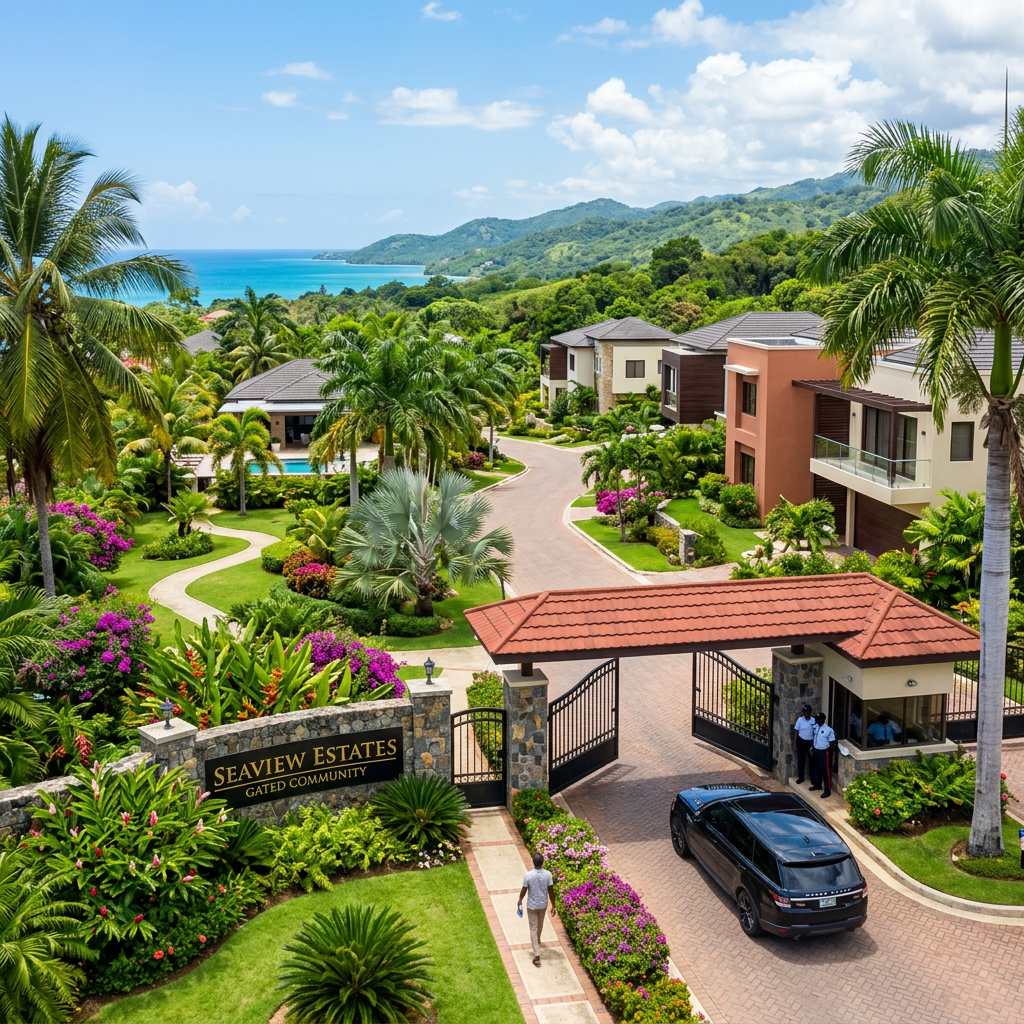
Gated Communities
Popular among diaspora buyers because they typically offer:
- Security
- Landscaping and maintenance
- Community amenities
- Easier property management
Stand-Alone Homes
Ideal for:
- Retirement
- Family living
- Long-term ownership
These properties often provide larger lots and more privacy but may require additional maintenance arrangements.
Land
Purchasing land can be a cost-effective way to build your dream home over time.
However, buyers should carefully investigate:
- Access roads
- Utilities
- Zoning requirements
- Title status
- Survey information
Step 3: Work With a Licensed Real Estate Professional
One of the biggest mistakes overseas buyers make is relying on unlicensed individuals.
Always work with a licensed real estate professional.
Before moving forward with any property, verify that your agent is properly licensed through the appropriate Jamaican real estate authorities.
A licensed agent can help:
- Identify suitable properties
- Negotiate pricing
- Coordinate inspections
- Manage communications while you are overseas
This simple step can significantly reduce the risk of fraud.
Step 4: Hire a Jamaican Attorney
Your attorney is one of the most important members of your purchasing team.
A Jamaican attorney will:
- Review contracts
- Conduct title searches
- Verify ownership
- Coordinate legal documentation
- Manage escrow arrangements
- Register the transfer of ownership
Even if you trust the seller or know the property owner personally, independent legal representation is strongly recommended.
Many property problems can be avoided simply by allowing an attorney to complete proper due diligence.
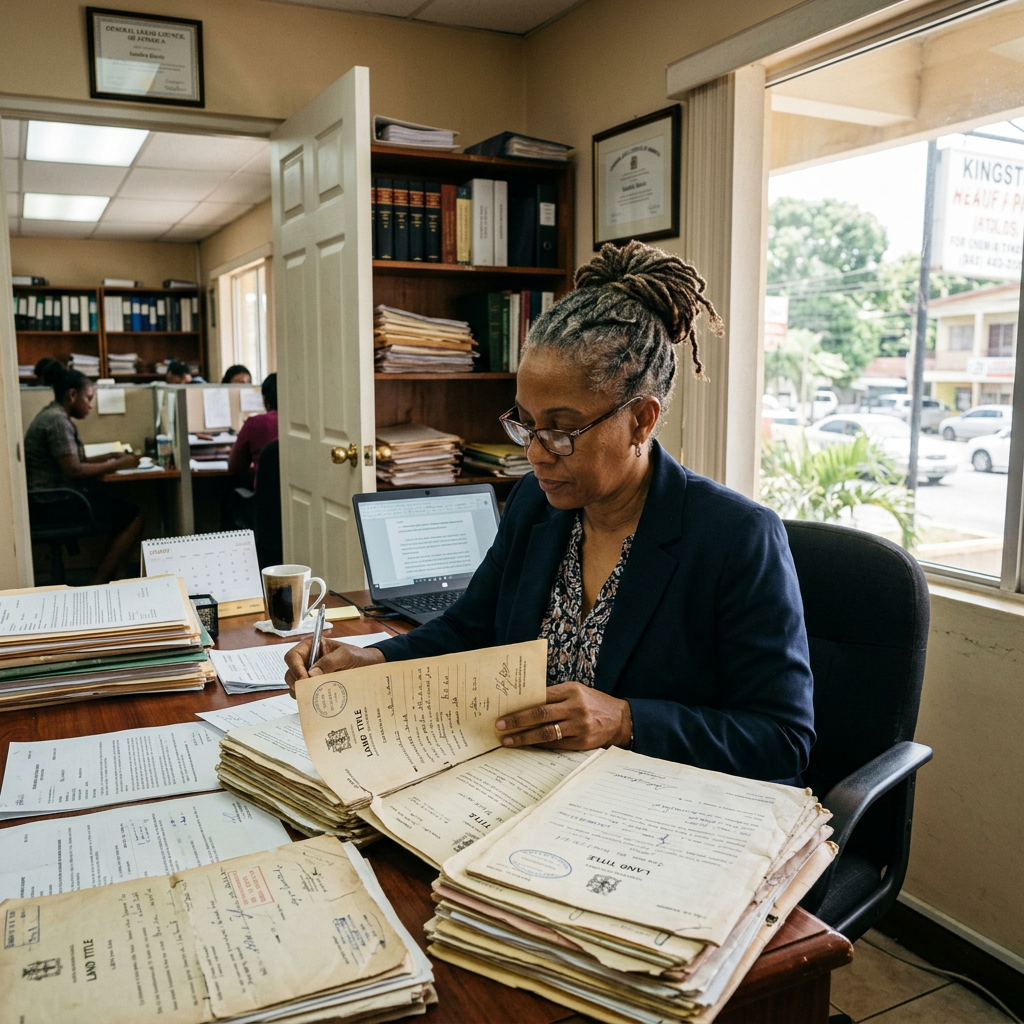
Step 5: Conduct a Title Search
Before signing agreements or sending significant funds, your attorney should conduct a title search through the National Land Agency (NLA).
A title search helps confirm:
- The legal owner of the property
- Existing mortgages
- Caveats
- Court orders
- Encumbrances
- Restrictions affecting the property
A title search can reveal problems that may not be obvious from advertisements or conversations with sellers.
Step 6: Make an Offer and Sign the Agreement for Sale
Once you have selected a property and completed preliminary checks, an offer can be submitted.
If accepted, an Agreement for Sale is prepared.
Your attorney should review every section of the agreement before you sign.
The agreement typically outlines:
- Purchase price
- Deposit requirements
- Closing date
- Conditions of sale
- Responsibilities of buyer and seller
Once signed, the agreement becomes legally binding.
Step 7: Understand Deposits and Financing Options
After signing the Agreement for Sale, buyers are typically required to pay a deposit, often around 10% of the purchase price. The deposit is usually held in the attorney’s trust account until the transaction is completed.
Financing Options for Overseas Buyers
If you are not purchasing with cash, several Jamaican financial institutions offer mortgage products for overseas Jamaicans and foreign buyers.
Lenders may include:
- NCB
- JN Bank
- VM Building Society
- Sagicor Bank
- First Global Bank
- CIBC Caribbean
Mortgage rates, down payment requirements, and eligibility criteria vary by lender and borrower profile.
Island Breeze Tip
Do not rely on advertised rates alone. Always request a written mortgage quotation and confirm current rates directly with the lender before making an offer on a property.
If you contributed to Jamaica’s National Housing Trust (NHT) before moving overseas, you may still qualify for certain benefits, refunds, or mortgage products. Contact the NHT directly to discuss your eligibility and current options.
Step 8: Budget for Closing Costs
One of the biggest surprises for first-time buyers is the amount of money required beyond the purchase price.
As a general guideline, total buyer closing costs can range from approximately 9% to 12% of the property’s value.
Common costs may include:
- Transfer Tax
- Registration Fees
- Attorney Fees
- Survey Fees
- Valuation Fees
- Mortgage Fees
- Insurance Costs
Important Note About Taxes and Fees
Transfer tax is currently 2%, but responsibility for payment should always be confirmed in the Agreement for Sale.
Registration fees vary depending on the transaction and property value. Rather than relying on a fixed percentage, buyers should use the National Land Agency Online Fee Calculator to estimate registration costs.
Government fees and taxes can change, so always verify current amounts before closing.
Step 9: Register the Property and Transfer Ownership
Once all legal requirements have been satisfied and funds have been transferred, your attorney will submit the required documents to the National Land Agency.
The registration process officially transfers ownership into your name.
After registration is completed, the land records are updated and you become the legal owner of the property.
Depending on the complexity of the transaction, registration timelines can vary.
Using Power of Attorney While Living Overseas
Many overseas buyers complete property purchases without travelling to Jamaica.
This is often accomplished through a Power of Attorney (POA).
A Power of Attorney allows you to authorize a trusted individual or attorney to sign documents and complete specific actions on your behalf.
A properly prepared POA can be used to:
- Sign sale agreements
- Complete closing documents
- Handle registration matters
- Communicate with government agencies
Always obtain legal advice before preparing a Power of Attorney to ensure it meets Jamaican legal requirements.
Common Mistakes Diaspora Buyers Make
Skipping a Title Search
Never purchase property without verifying ownership through an official title search.
Using Unlicensed Agents
Always verify that your agent is properly licensed.
Failing to Budget for Closing Costs
Many buyers focus only on the purchase price and overlook taxes, registration fees, attorney fees, and other expenses.
Buying Based Only on Photos
Pictures do not always tell the full story.
Whenever possible, arrange:
- Property inspections
- Surveys
- Independent valuations
Ignoring Ongoing Expenses
Remember to budget for:
- Property taxes
- Insurance
- Maintenance
- Security
- Property management services
Property Scams and Red Flags to Watch For
Unfortunately, overseas buyers are sometimes targeted by scammers.
Watch for these warning signs:
Pressure to Send Money Quickly
Be cautious of anyone demanding immediate payment.
Missing or Unclear Ownership Records
If ownership cannot be clearly verified, stop the transaction until proper documentation is produced.
Unlicensed Representatives
Avoid individuals who cannot prove they are authorized to sell or represent the property.
Prices That Seem Too Good to Be True
Extremely discounted properties often have hidden legal or structural issues.
Requests for Direct Personal Transfers
Large payments should generally move through appropriate legal and escrow channels rather than personal accounts.
Special Considerations When Buying Family Land
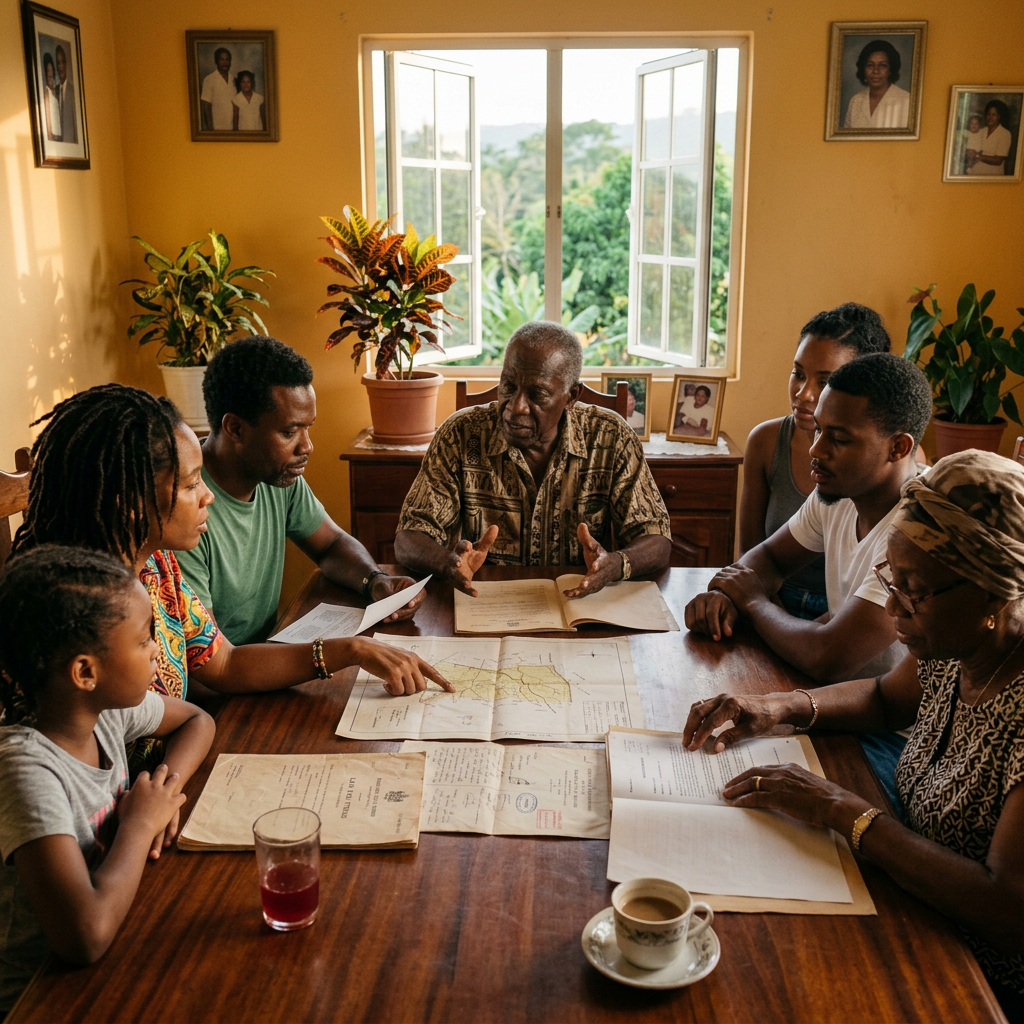
Family land can be one of the most complicated types of property in Jamaica.
In many cases, land has passed through multiple generations without formal probate or title transfers.
As a result, dozens of family members may have potential claims.
Before purchasing family land:
- Verify ownership carefully.
- Confirm whether probate was completed.
- Determine whether all beneficiaries have agreed to the sale.
- Obtain legal advice regarding title status.
Family land transactions often require additional due diligence compared to properties with a clean registered title.
Official Government Resources Every Buyer Should Know
These resources can help you research properties, estimate costs, and verify information.
National Land Agency (NLA)
Useful services include:
- Title Search Information
- Document Search Services
- Online Fee Calculator
- Land Titling Services
- Forms Library
Tax Administration Jamaica (TAJ)
Useful services include:
- TRN Applications
- Property Tax Payments
- Tax Verification Services
- eServices Portal
Ministry of Foreign Affairs & Foreign Trade
Diaspora Affairs provides information and support resources for Jamaicans living overseas.
Realtors Association of Jamaica
Use the Find a Realtor directory when researching real estate professionals.
Related Island Breeze Jamaica Guides
- How to Apply for a Jamaican TRN From Overseas
- How to Pay Jamaican Property Taxes Online From Overseas
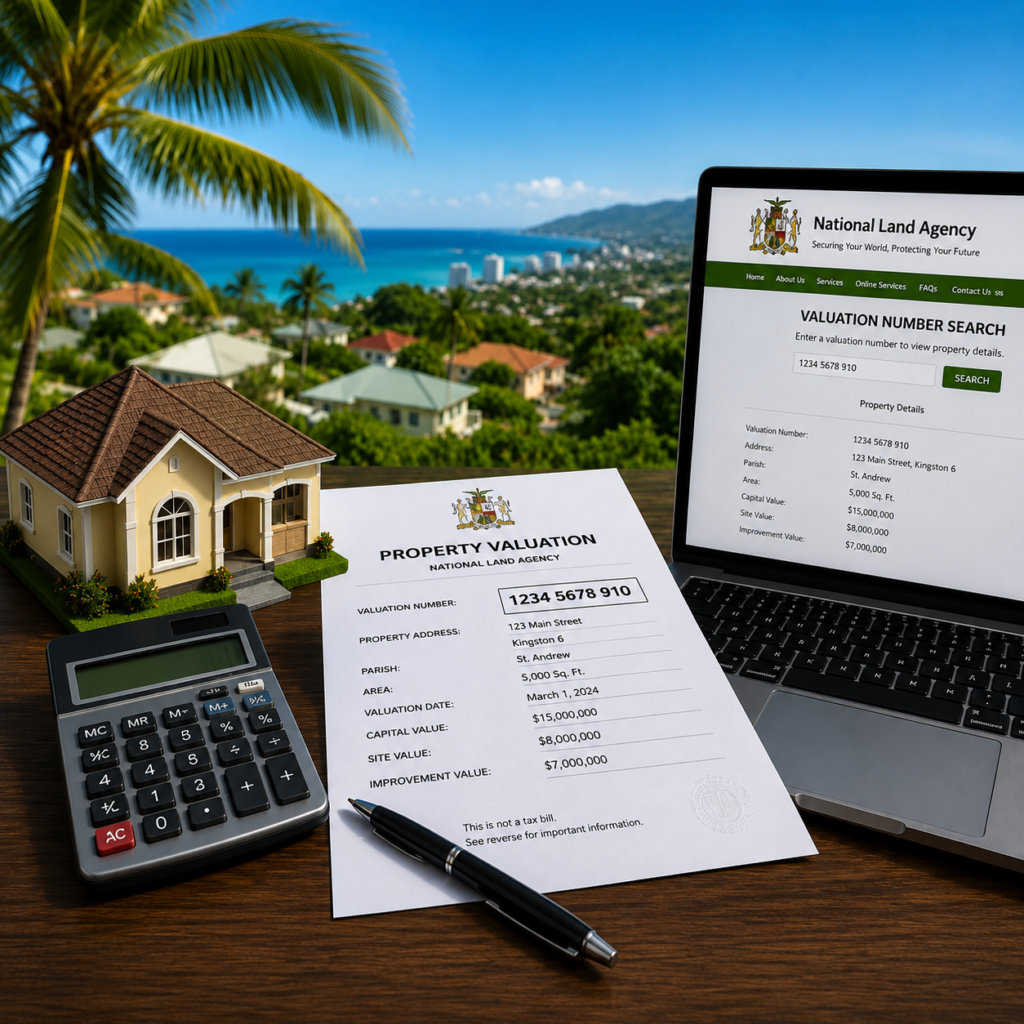
- Understanding Jamaica Valuation Numbers
- The Jamaican Overseas Homeowner Checklist
External Resources
Official Resources
- National Land Agency Online Fee Calculator
- National Land Agency Title Search Information
- National Land Agency Document Search
- National Land Agency Forms Library
- Tax Administration Jamaica eServices Portal
- Realtors Association of Jamaica
- Ministry of Foreign Affairs Diaspora Affairs
Frequently Asked Questions
Can foreigners buy property in Jamaica?
Yes. Jamaica allows foreigners and non-residents to purchase property without special ownership restrictions.
Do I need a TRN to buy property in Jamaica?
Yes. A Taxpayer Registration Number (TRN) is required for property transactions.
Can I buy property without traveling to Jamaica?
In many cases, yes. A properly prepared Power of Attorney may allow a transaction to be completed remotely.
How long does the process take?
Cash purchases often take approximately 90 to 120 days. Mortgage transactions may take five to six months or longer depending on approvals and documentation.
Can I get a mortgage while living overseas?
Many Jamaican lenders offer mortgage products for overseas Jamaicans and foreign buyers.
What is a title search?
A title search verifies ownership and identifies any mortgages, caveats, liens, or legal restrictions affecting a property.
Should I be cautious about family land?
Yes. Family land can involve multiple heirs and ownership claims, making legal verification especially important.
Final Thoughts
Buying property in Jamaica from abroad can be one of the most rewarding investments you ever make. Whether your goal is retirement, investment income, or creating a permanent connection to home, careful planning and proper due diligence can help you avoid costly mistakes.
Take your time, build a team of trusted professionals, verify every detail, and use official government resources whenever possible.
The extra effort today can save significant stress tomorrow.
If you are beginning your property journey, explore our growing collection of Island Breeze Jamaica guides designed to help Jamaicans at home and abroad navigate property ownership with greater confidence.
🌴 Island Breeze Perspective
Buying a house in Jamaica while living overseas was one of the most exciting things we’ve done, but it was also one of the most frustrating. From finding the property to closing, the entire process took about six months.
One of the best decisions we made was flying to Jamaica to see the property in person. Photos can be deceiving, and there is no substitute for walking through a home yourself and getting a feel for the area. We used the realtor who listed the property( that’s not always the best decision, since they also work for the seller) and hired an attorney who came highly recommended by a friend.
What surprised us most was the amount of back-and-forth involved. There were countless phone calls and emails, and some documents required original wet signatures, which meant sending paperwork through DHL. We also learned that not every notarization would be accepted. Documents we had notarized through our bank were rejected, and we ultimately had to make a trip to the Jamaican Consulate to have them certified properly.
Looking back, our biggest advice is to be patient and expect delays. Things may not move as quickly as you are accustomed to overseas, and requirements can change along the way. A little flexibility, good communication, and a lot of patience can make the journey much less stressful.